
Modi's greater weakness is his inability since July when he directed the exit of Dharmendra Pradhan, to come up with a political counter strategy. Security measures and executive orders as seen in recent days will only likely further weaken him and make him as lame duck a premier as many prior to him, Indira Gandhi and Manmohan Singh included, observes Nilanjan Mukhopadhyay.

Opposition parties, led by Rahul Gandhi and Mallikarjun Kharge, plan to march to the Supreme Court on Monday to meet the Chief Justice of India. They aim to submit a memorandum regarding alleged 'vote chori' and demand CEC Gyanesh Kumar's resignation, halting of SIR, and a return to paper ballots. The protest follows widespread detentions during previous demonstrations, which the opposition condemns as an assault on democracy.

Actor Imran Khan, an American citizen, has been served a notice by Mumbai Police directing him to leave India by October 28 for allegedly violating immigration laws. This comes after his participation in recent political protests. His lawyer plans to challenge the decision in the Bombay High Court.
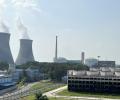
Atomic Energy Commission Chairman Ajit Kumar Mohanty announced that India's private sector is projected to invest Rs 7.5 lakh crore and contribute 30 GW towards the nation's goal of achieving 100 GW nuclear power capacity by 2047. This marks a significant policy shift, facilitated by the SHANTI Act, encouraging private participation in nuclear energy beyond the traditional public sector model. The country is also exploring Small Modular Reactors (SMRs) for industrial needs and advancing its three-stage nuclear power programme, leveraging its substantial thorium reserves.

Prime Minister Narendra Modi has called for the resolution of the West Asia crisis and the Ukraine conflict through dialogue and diplomacy, asserting that military action alone cannot achieve lasting peace. He made the remarks after talks with Norwegian Prime Minister Jonas Gahr Store.

Indian benchmark equity indices, Sensex and Nifty, extended their rally for a fifth consecutive session, driven by optimism surrounding a potential US-Iran peace deal and a significant drop in crude oil prices. Despite hawkish remarks from the US Fed, investors remain hopeful that easing energy prices could temper inflationary pressures.

Pakistan and Turkiye have agreed to deploy military forces in Saudi Arabia as part of the Makkah Alliance for Defence. This decision follows recent attacks by Houthi rebels and aims to strengthen collective deterrence against threats to Saudi Arabia. The alliance, formed in August, considers an attack on one member as an attack on all.

Citizens in Delhi faced significant restrictions and detentions on Saturday while attempting to protest alleged irregularities in voter rolls. Despite barricades, metro closures, and vehicle diversions, individuals found various ways to reach central Delhi, determined to voice their concerns about the electoral process and fundamental rights.

Before protesting against the State, the citizen should not have to ask: Sir, may I protest, please?, asserts Prem Panicker.

Xi's bilateral meeting with Modi was substantial and readouts from both sides gave indications of rapprochement, if not a reset of bilateral relations between India and China, notes Ambassador T P Sreenivasan.

An Omani citizen, Hamam al-Hammami, has been identified as the flydubai co-pilot who attacked Indian Captain Smit Machchhar and allegedly attempted to take control of a Dubai-Tel Aviv flight, which the UAE has now confirmed as a 'terrorist act'.

Experts at a national symposium in Shillong discussed the role of Artificial Intelligence in tourism, emphasising that AI should support human judgment, local knowledge, and cultural values rather than replace them. Discussions highlighted the need for robust policies to address ethical concerns, safeguard livelihoods, and preserve cultural heritage while leveraging AI for innovation and sustainability in the tourism sector, particularly in Meghalaya.

Indian benchmark indices, Sensex and Nifty, extended their winning streak for a fourth consecutive session, driven by a significant drop in crude oil prices following a peace deal between the US and Iran. This development has fuelled investor confidence and buying activity across the market.
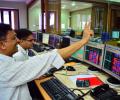
Indian benchmark indices Sensex and Nifty surged significantly in early trade, mirroring a global rally and a sharp decline in crude oil prices following the finalisation of a peace deal between the US and Iran to end their 107-day conflict and reopen the Strait of Hormuz.

Students at Lovely Professional University (LPU) in Phagwara, Punjab, protested alleged rape claims, leading to a 15-hour blockage of National Highway-44 and clashes with police. The university suspended classes and postponed exams. BJP leader Ravneet Singh Bittu accused the AAP government of instigating the unrest to disrupt an upcoming Amit Shah rally, while police registered a rape case and formed an SIT despite LPU calling the claims "rumours."

During the 18th BRICS Summit in New Delhi, Chinese President Xi Jinping and Prime Minister Narendra Modi held a bilateral meeting, outlining a four-point approach for the steady and long-term development of China-India relations. The leaders stressed strategic understanding, win-win cooperation, mutual respect, and inclusive multilateral engagement, reaffirming their commitment to resolving the boundary question and addressing economic concerns. They also discussed global challenges and strengthening people-to-people ties.

Indian benchmark stock indices, Sensex and Nifty, extended their winning streak for a third consecutive day, driven by positive global market trends and a significant softening of crude oil prices following a peace deal between the US and Iran.
Indian stock markets extended their gains for a second consecutive session, with the Sensex closing 736 points higher, driven by a global equity rally and a significant drop in crude oil prices following the finalisation of a peace deal between the US and Iran to end their 107-day conflict and reopen the Strait of Hormuz.

US President Donald Trump is expected to sign the Lindsey O. Graham Sanctioning Russia and Iran Act of 2026 later on Friday (local time). A White House official confirmed the development to ANI without revealing further details.

There are only bad and worse options before him, points out Aakar Patel.

Nepal's Hindu groups have sought an all-party discussion on restoring Hindu-nation status within three months.

A US-Iran memorandum of understanding is set to be signed, outlining sanctions relief, the reopening of the Strait of Hormuz, and a 60-day negotiation window for Iran's uranium enrichment, but US President Donald Trump has underscored the deal's conditional nature, warning of military action if Tehran fails to comply.

US President Donald Trump announced a finalised peace deal between the US and Iran, set for signing on June 19 in Switzerland, with key figures like J D Vance, Steve Witkoff, and Jared Kushner from the US side, and Abbas Araghchi and Mohammad Bagher Ghalibaf representing Iran, alongside Pakistani mediators Field Marshal Asim Munir, Shehbaz Sharif, Ishaq Dar, and Mohsin Naqvi, playing crucial roles in the diplomatic breakthrough.

Congress leader Rahul Gandhi has written to Jharkhand Chief Minister Hemant Soren, urging him to personally meet with student representatives protesting irregularities in state recruitment examinations. Gandhi stressed the legitimacy and peaceful nature of the students' demands, highlighting the Congress party's support for their right to protest.

Churches across the Mumbai Metropolitan Region have started asking worshippers to fill self-declaration forms, affirming they are attending prayers voluntarily. This move comes after Maharashtra's new anti-conversion law, the Maharashtra Freedom of Religion Act, 2026, came into force, leading to concerns among the Christian community about potential harassment and false accusations.

Prime Minister Narendra Modi and Indonesian President Prabowo Subianto have significantly advanced the India-Indonesia Comprehensive Strategic Partnership, securing crucial agreements on defence, critical minerals, and maritime security, including BrahMos missile supply and Sabang port development.

Indian benchmark indices Sensex and Nifty surged significantly in early trade, tracking a global rally fueled by US President Donald Trump's declaration of an end to the war with Iran and a subsequent drop in crude oil prices.

'She was not burdened by the knowledge of her craft and the world. She just was a child till her last days.' 'When she smiled, everybody in the room would light up.'

Iranian President Masoud Pezeshkian declared that Iran will not succumb to "bullying" from the US and Israel, vowing to protect national interests amidst escalating West Asian hostilities. During his visit to New Delhi for the BRICS summit, Pezeshkian also discussed strengthening bilateral ties with Prime Minister Narendra Modi and advocated for local currencies in BRICS trade, positioning Iran as a strategic energy and transport partner.

The Tata Institute of Social Sciences (TISS) has announced Dr C S Pramesh, director of Tata Memorial Hospital, as the new chief guest for its 86th Convocation on August 22, replacing Chief Justice of India Justice Surya Kant, who was unavailable due to a full calendar.

'Giving up is very easy. But don't give up. Try out whatever you can. Something will happen.'

Some see in the CJP the potential of weakening the Opposition. Hence the BJP/RSS's 'softly softly catchee monkey' approach, with co-option being the ultimate aim, points out Aditi Phadnis.

The UN General Assembly has adopted a resolution, backed by India, to correct the world map for a more accurate representation of continental landmasses. The resolution addresses the distortions caused by the widely used Mercator projection, which minimises the perceived sizes of regions like Africa, Latin America, and South Asia, promoting an unbalanced global view. India supports the move towards more accurate cartographic practices, specifically endorsing broader use of Equal Area map projections.

India and China are in what experts call 'a cooperation-versus-competition situation'.

Chinese President Xi Jinping's upcoming visit to India for the BRICS summit is a pivotal diplomatic event poised to significantly impact bilateral ties and global cooperation amidst ongoing international instability.

Supreme Court Justice Ujjal Bhuyan critically examined police conduct in India, raising serious concerns about alleged assaults on protesters, custodial torture, and the urgent need for comprehensive police reforms to uphold human rights and the rule of law.

The Nagaland Baptist Church Council has voiced strong opposition to any directive making the singing of 'Vande Mataram' compulsory, especially for Christians. They argue that patriotism should not be reduced to forced conformity and that India's constitutional values of liberty, pluralism, and freedom of conscience must be respected. The council also called for dialogue and sensitivity from state institutions.

A Kishore Kumar song, a birthday cake, a prince's break from protocol to thank his driver, a Persian painting on the ceiling of the presidential residence -- the BRICS Summit had many memorable moments.

The Resident Doctors' Association of AIIMS, Delhi, has appealed to President Droupadi Murmu for an independent, time-bound inquiry into the alleged use of force against peaceful protesters at Jantar Mantar and raised concerns over activist Sonam Wangchuk's reported inability to leave Safdarjung Hospital.

As India's decline continued on global indices, the government first blamed methodology and then motives. This is where we remain today as we wish each other and ourselves a happy Independence Day, points out Aakar Patel.
